Record spending push ties youth culture access to a growing slate of arts and content jobs
South Korea's Ministry of Culture, Sports and Tourism will channel record funding into young people and artists next year, as its overall budget passes 9 trillion won for the first time.
The ministry set its 2027 budget proposal at 9.634 trillion won ($7.09 billion), up 22.6 percent from this year's 7.855 trillion won, the ministry said Friday. That growth rate nearly doubles the 12.8 percent increase in the government's total spending, raising culture's share of total government spending to 1.16 percent from 1.08 percent.
The proposal still requires Cabinet endorsement and National Assembly approval before taking effect.
Culture and arts programs will get the largest share, at 3.854 trillion won, or 40 percent of the total budget. The ministry said it will concentrate spending on five priorities: a stronger safety net for artists and support for the basic arts; more cultural access and job opportunities for young people; growing the K-content industry as a national strategic sector; regional tourism; and sports infrastructure.
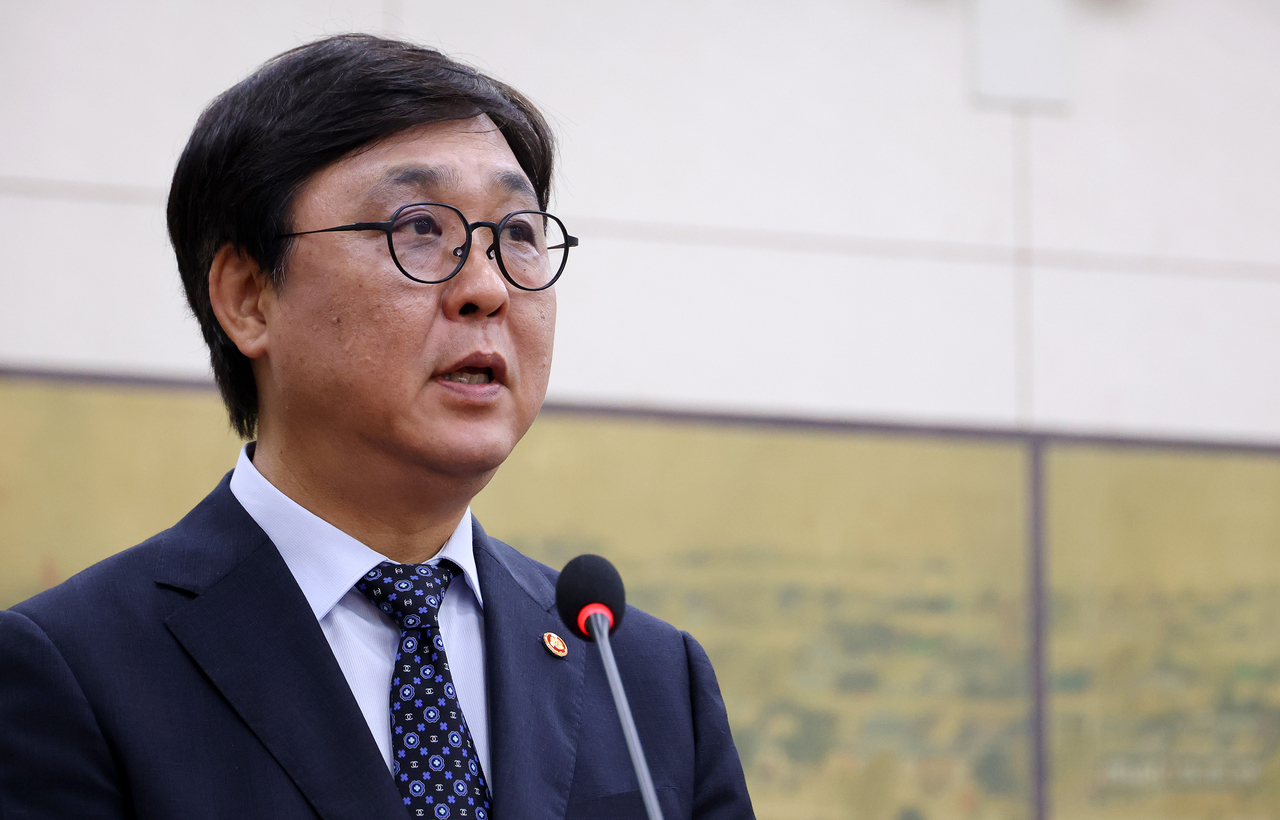
Kim Jung-hoon, the ministry's director general for planning and coordination, said during a press conference Thursday that the outsized jump in basic arts and culture spending — even as content industry funding continued to grow — reflects a deliberate choice to strengthen what he called the foundation of a "culture powerhouse."
The most sweeping change targets young adults. The Youth Culture Pass, currently limited to 19- and 20-year-olds, will expand next year to cover ages 19 to 34 — the government's legal definition of youth. Funding will jump to 792.5 billion won from 36.1 billion won. Per-person support will run 100,000 won in the Seoul metropolitan area and 150,000 won elsewhere, usable up to 16 times a year, and the program will be fully state-funded rather than co-financed with local governments.
"This isn't just about giving young people the chance to enjoy culture," Kim said. He said the program is designed to feed into a broader cycle connecting local culture revitalization with the basic arts and content industry.
The ministry is also expanding culture- and tourism-sector jobs and overseas opportunities for young people: arts organization trainee slots will grow to 600 from 365, game industry youth internships to 500 from 40, and the Youth K-Culture Global Frontier program's participants to 2,000 from 700, with its budget nearly tripling to 14.2 billion won. A new 2.2 billion won program will also support young workers at inbound travel agencies, particularly in the regions.
Support for artists' basic livelihood security — covering industrial accident insurance and national pension premiums for freelance artists with Certification of Arts Activity — will rise to 31.1 billion won from 1.5 billion won, expanding coverage to 39,000 artists from 4,400, and will add health checkups for the first time in 2027. The ministry will also raise artist loans, with jeonse (rental deposit) loans quadrupling to 40 billion won.
Separately, the ministry is working to fix its Certification of Arts Activity system, long criticized for slow processing and complex paperwork. Extra staff has already cut processing time to eight weeks from 12, with more hiring planned next year, while a task force is expected to announce paperwork reforms soon.
Arts Council Korea's global creative exchange program — which funds Korean artists' overseas residencies and brings foreign artists to Korea for joint projects — will grow to 8.5 billion won from 5.5 billion won, with beneficiaries more than doubling to 215 from 100, according to the ministry's arts policy division director.
The ministry is also boosting K-content investment, restructuring policy financing around major IP and overseas expansion with a record 2.2 trillion won in support. K-Content Fund contributions will rise to 603 billion won, with the global league fund more than tripling to 200 billion won as the ministry shifts from funding smaller ventures toward attracting foreign capital and export-scale IP.
In tourism, 93.5 billion won will go toward "mega tourism zones" around regional airport hubs — Gimhae, Daegu, Cheongju, Muan and Yangyang — aimed at routing foreign visitors directly into the regions rather than through Seoul. The state subsidy rate for rural travel support will rise to 50 percent from 30 percent, doubling recipients to 400,000.
In sports, funding to renovate aging public facilities will more than double to 255.8 billion won, and youth sports support will rise to 42.4 billion won, expanding supported sports to 36 from 10.
gypark@heraldcorp.com